Those figures come from 2026 interview prep guidance on answer length, and the useful part is not the precise number attached to each row. What matters is that a 90-second answer has room for three things and nothing else.
How to run it: set a timer for your target and answer the question against it. If you reach your result before the time runs out, stop there rather than filling the remaining seconds, because stopping early is a skill worth developing.
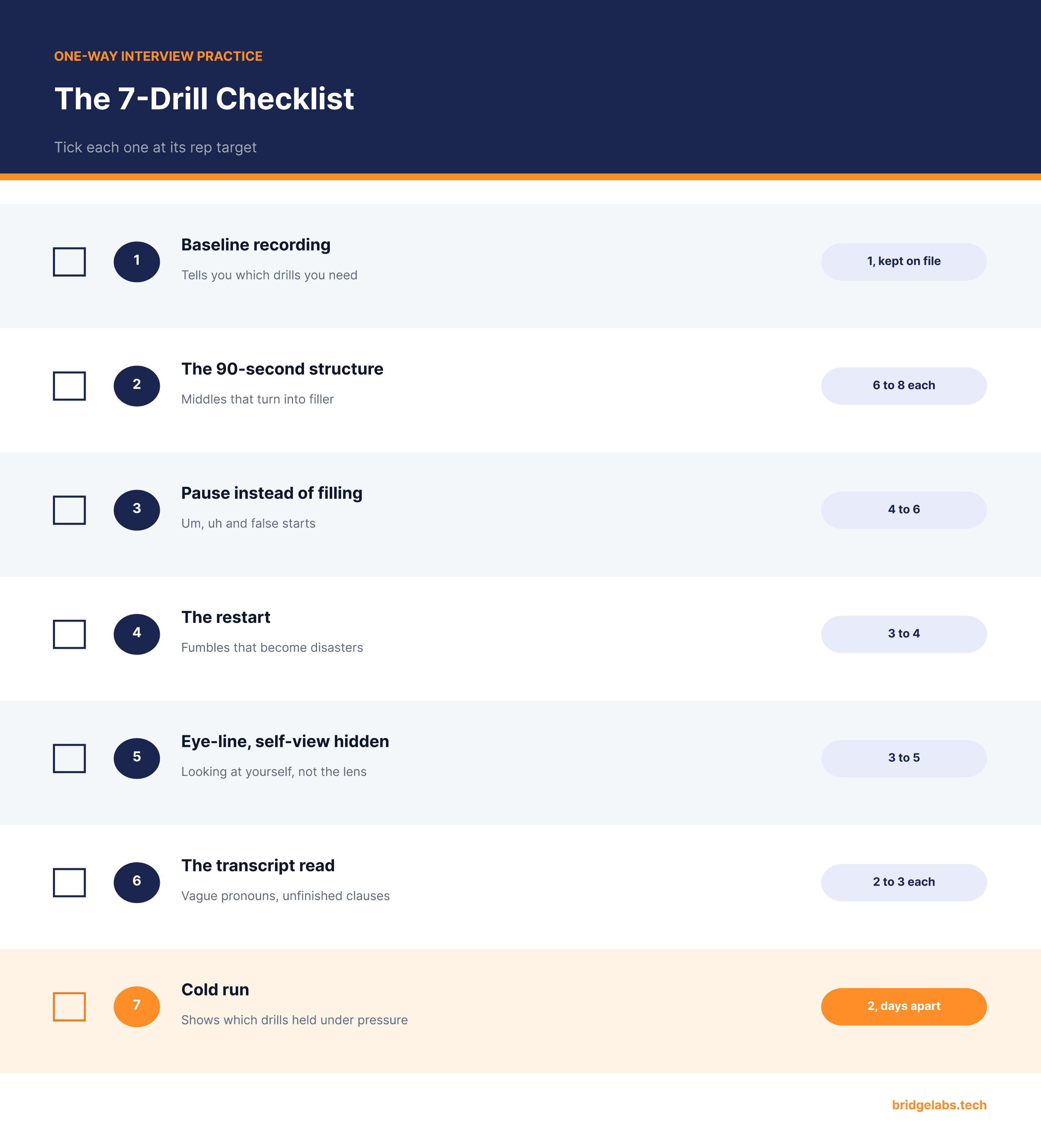
Reps needed: six to eight per question type before the shape holds without you having to think about it.
3: Fix Filler Words by Pausing, Not by Speeding Up
The instinct when you notice yourself saying "um" is to talk faster, which reliably produces more of them rather than fewer. Filler words are what your mouth does while your brain catches up, so the only durable fix is letting your brain catch up in silence instead.
Silence feels considerably longer to the person speaking than it does to anyone listening. A one-second pause sounds deliberate on playback and feels like a catastrophe while you are doing it, and closing that gap in perception is the entire point of this drill.
How to run it: answer a question under a rule that you must pause rather than fill, then record it and count the fillers before repeating. Most people halve their count within four attempts, and the ones that remain tend to cluster at the same two or three transition points, which is genuinely useful information.
Reps needed: four to six attempts, then a check-in every few sessions, because this one regresses under pressure more than any other drill here.
4: Practice the Restart
Most platforms limit the number of retakes you get, with some allowing one and some allowing none at all. The employer sets that limit, not the platform, which means you cannot assume you will get a second attempt.
That makes recovering from a fumble a skill worth owning outright. If you lose your thread forty seconds into an answer with no retake available, you can either restart the sentence cleanly or keep going, and untrained people tend to do neither well. They apologize, lose the thread completely, and spend the remaining time recovering rather than answering.
How to run it: deliberately break your own answer halfway through, then recover in a single sentence without apologizing for it. Something like "let me put that more clearly" followed by the point, delivered cleanly, works in almost every case.
Reps needed: three or four attempts. This is a short drill with a high payoff because it turns what feels like a disaster into a minor stumble that nobody remembers.
5: Eye-Line and Camera Habits
You already know to look at the lens rather than the screen, and you will still look at yourself because watching your own face is nearly involuntary for most people.
Knowing this does not fix it, and no amount of further reading will either. Repetition fixes it, and removing the temptation entirely makes the repetition work faster.
How to run it: cover your self-view or move the window so your own image sits directly beneath the lens, then put a small mark next to the camera as a target. Record a full answer and watch it back, looking only at your eye-line, ignoring everything else in the recording.
Reps needed: three to five attempts with the self-view hidden, after which looking at the lens no longer feels strange but normal.
6: The Transcript Read
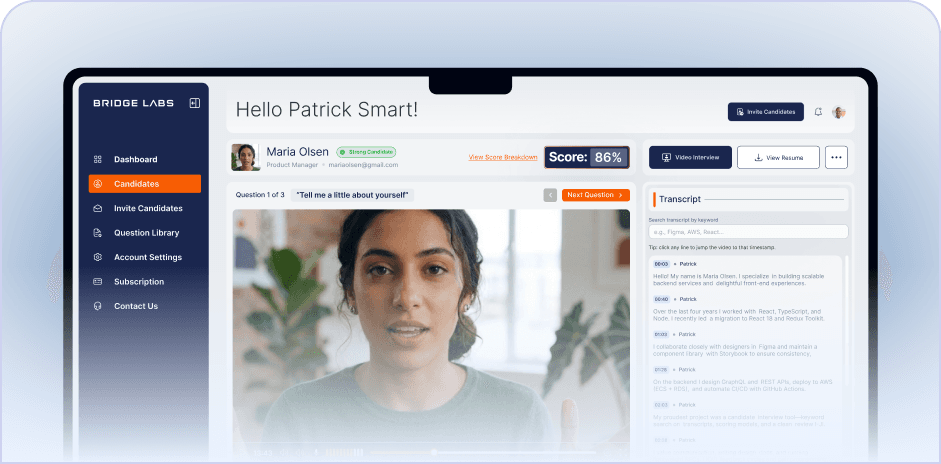
This drill catches a category of problems that watching yourself will never reveal, and it exists because of the way recorded answers are usually reviewed. Most scoring works from a transcript of what you said rather than from your face, which we covered in how AI video interview software works, so your answer gets assessed as text before anybody looks at you.
Vague pronouns are the most common casualty. A sentence like "we used that system to fix it" sounds perfectly clear when you say it aloud with all the context sitting in your head, and it carries almost no information once it is written down. Unfinished clauses are the second, because a listener fills those gaps automatically, while a transcript preserves every one of them.
How to run it: record an answer, then read the transcript without watching the video at all. Mark every pronoun that has no clear referent and every sentence that does not finish properly, then rewrite those two things and record the answer again.
Reps needed: two or three per question type. The habit transfers quickly once you have seen your own speech written down, and it tends to improve your spoken clarity permanently.
7: The Cold Run
Everything above is practice under comfortable conditions that you control completely. This final drill deliberately removes that comfort, because the conditions that matter are not comfortable.
Sit down once with three questions you have not specifically rehearsed, taking no preparation between them, allowing yourself no retakes, with the timer running throughout. This is the closest approximation you can build to the conditions of an actual recorded round, and it is where you find out which of the earlier drills genuinely stuck.
How to run it: take questions from a list you did not write yourself, or ask somebody else to choose them for you. Record all three back-to-back, then watch all three in a single sitting rather than spreading the review out.
Reps needed: two cold runs a few days apart. If the second is noticeably better than the first, you have finished, and if it is not, go back to whichever drill the playback points you toward.
A Practice Schedule That Fits Around a Job Search
The total time involved is a little over three hours spread across ten days. The spacing matters more than the volume does, because delivery habits consolidate between sessions rather than during them.
 Meli ImeldaWorkforce05 Oct 2026