Rapid growth represents both the greatest opportunity and the most significant challenge for technology leaders. The pressure to expand technical teams quickly intensifies as companies secure new funding, win larger contracts, or accelerate product development. Yet scaling without strategy leads to predictable problems: communication breakdowns, inconsistent code quality, cultural fragmentation, and ultimately, reduced delivery capacity despite larger headcount.
The 2025 technology landscape adds unique complexities to team scaling. Remote and hybrid work arrangements have become standard, talent competition remains fierce, and new technical specializations emerge constantly. CTOs must navigate these realities while building teams that maintain velocity during expansion.
This guide provides practical, implementation-ready strategies for CTOs and technology leaders managing growth phases. Rather than theoretical frameworks, we focus on battle-tested and engineering leadership approaches that address the most common scaling challenges.
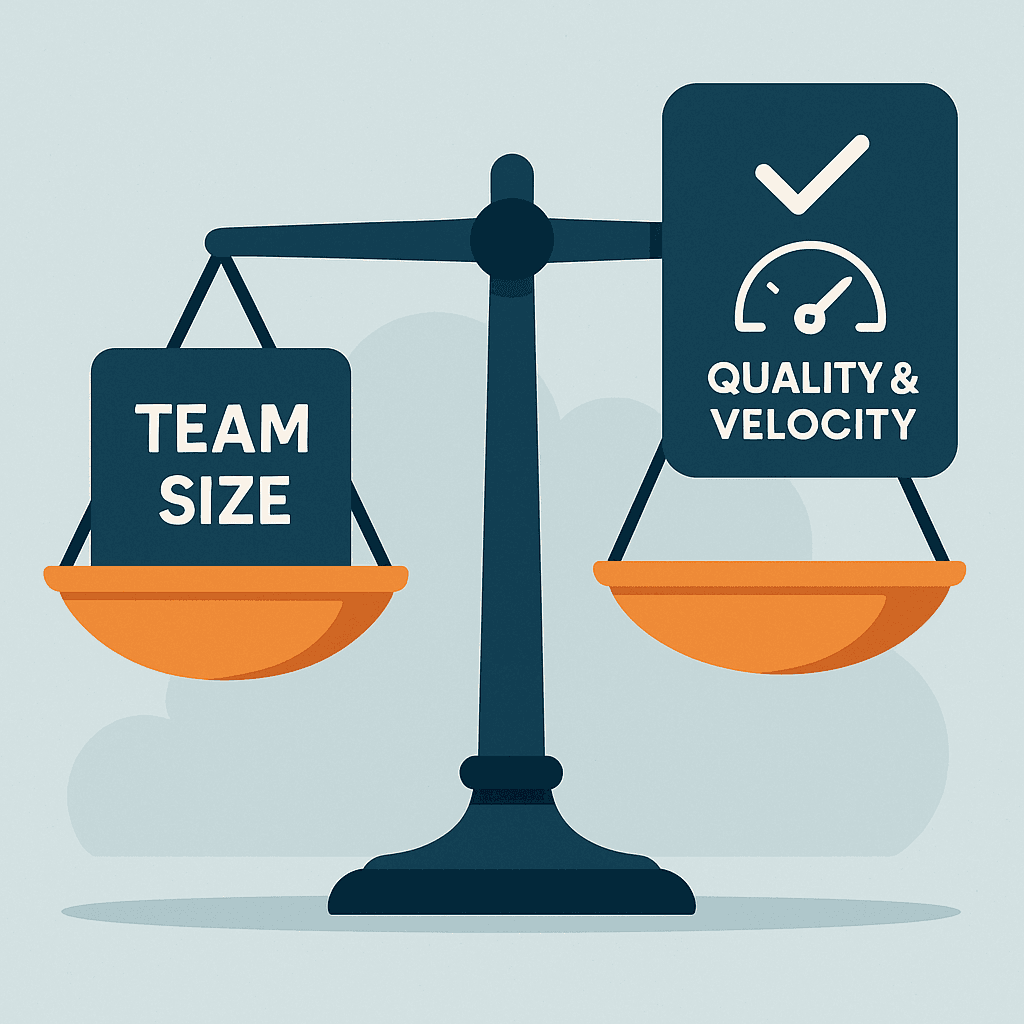
The balance between team size growth and maintaining quality/velocity
Before You Scale: Critical Foundations
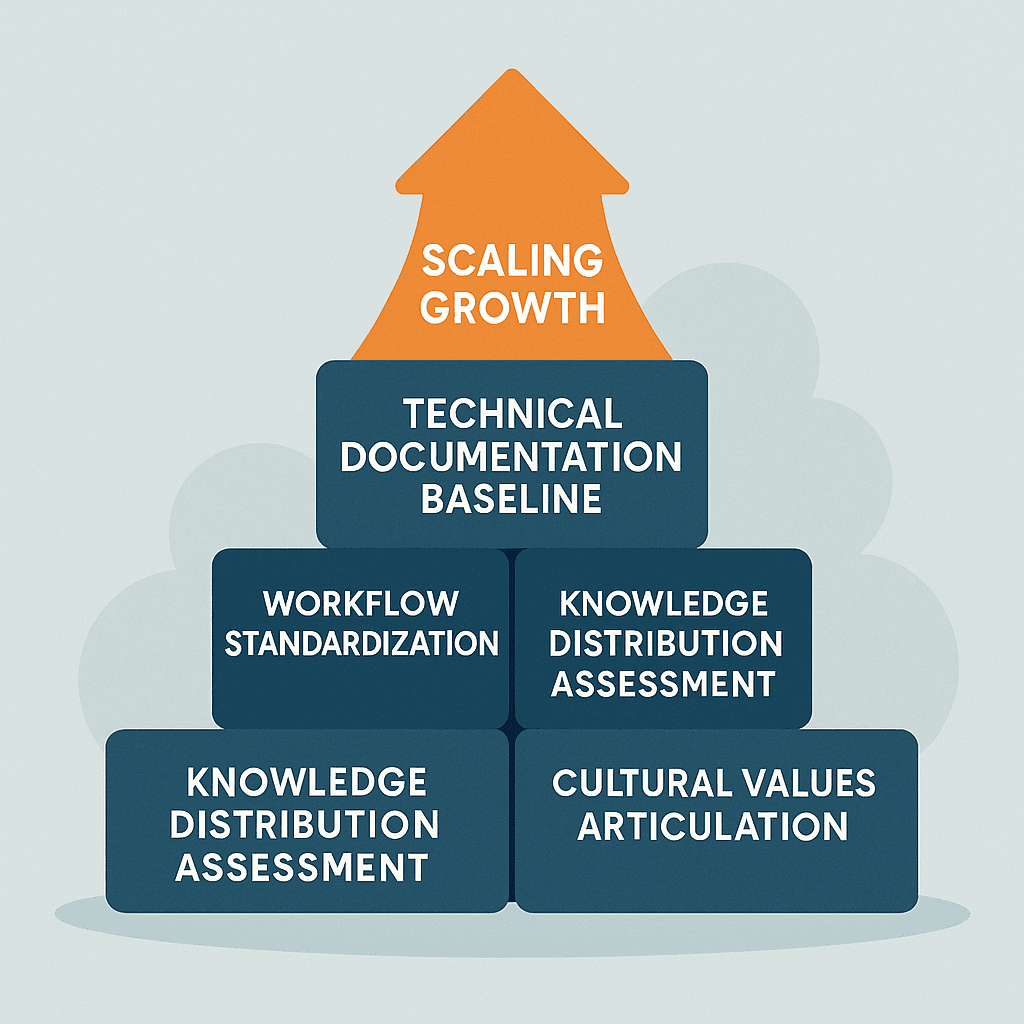
Before adding significant headcount, successful CTOs ensure several foundational elements are in place. These prerequisites prevent many common scaling problems before they begin.
Technical Documentation Baseline
Comprehensive, accessible documentation becomes exponentially more valuable as teams grow. Establish minimum documentation standards covering:
Architecture diagrams with clear system boundaries
Onboarding guides for each major system
Development environment setup instructions
Coding standards and review processes
Decision records explaining key technical choices
Documentation need not be perfect, but it should provide sufficient context for new team members to become oriented without requiring extensive 1:1 time with senior engineers.
These standards create clarity for new team members and reduce the cognitive load of day-to-day decision making during growth phases.
Knowledge Distribution Assessment
Identify knowledge concentration risks before scaling. Map which team members possess unique, critical knowledge about systems, processes, or customer needs. Create deliberate plans to distribute this knowledge through pairing, documentation, and knowledge-sharing sessions.
Cultural Values Articulation
Growing teams need explicit cultural anchors. Clearly articulate the behaviors and approaches your engineering organization values most. Successful teams typically document:
How decisions are made and communicated
How quality is defined and maintained
How collaboration is expected to occur
How feedback is given and received
These defined values guide hiring, onboarding, and management approaches during scaling.
Latest From Our Blog
Discover fresh insights, trends, and tips on tech talent and offshore development. Stay informed with our latest updates
Subscribe to our Newsletter
Get the best insights on remote work, hiring, and engineering management in your inbox.
Scaling requires effective talent acquisition approaches tailored to the current market realities. The most successful strategies combine multiple channels with smart qualification processes.
Expanding Sourcing Channels
Reliance on a single talent source creates bottlenecks during rapid scaling. Effective CTOs develop multiple pipelines:
Internal referral programs with meaningful incentives
Targeted outreach to passive candidates
Strategic technical community engagement
Educational partnerships for early-career talent
Global talent access through remote work options
Organizations that maintain multiple active channels can accelerate hiring during growth phases without sacrificing quality.
Qualification Process Optimization
As volume increases, qualification efficiency becomes critical. Structure your process to:
Use technical assessments that reflect actual work, not puzzle-solving
Evaluate both technical and collaboration capabilities
Involve team members while respecting their time
Standardize evaluation criteria to reduce bias
Create feedback loops to continually improve accuracy
The goal is identifying candidates who will succeed in your specific environment, not generic technical skill measurement.
Candidate Experience Design
In competitive markets, candidate experience significantly impacts close rates. Focus on:
Clear, transparent process communication
Timely updates and minimal delays
Meaningful technical discussions rather than interrogations
Authentic representation of team culture and challenges
Personalized outreach for key candidates
Well-designed experiences increase acceptance rates while attracting candidates aligned with a company's technical and cultural expectations.
Effective onboarding determines how quickly new team members become productive contributors. During scaling phases, this process requires particular attention.
Structured Technical Onboarding
Create standardized pathways that provide necessary context while allowing for quick contribution:
System architecture overviews with clear documentation
Development environment setup automation
First-day commit opportunities on manageable tasks
Graduated responsibility progression with clear milestones
Dedicated onboarding buddies for personalized support
The most effective programs balance comprehensive knowledge transfer with early productive experiences that build confidence and engagement.
Team Integration Approaches
Technical knowledge alone doesn't create effective team members. Deliberate integration efforts help new hires understand how work actually happens:
Scheduled introductions to key collaborators
Shadowing opportunities for critical workflows
Explicit discussion of team communication norms
Regular feedback exchanges in the early weeks
Inclusion in team rituals and decision processes
These integration practices accelerate the transition from technical capability to effective collaboration.
Remote and Hybrid Considerations
Distributed teams require adapted onboarding approaches:
Scheduled virtual coffee chats with team members
Digital-first documentation and knowledge resources
Clear working hour expectations and overlap requirements
Extra attention to communication tool proficiency
Periodic synchronous learning sessions
Organizations that excel at remote onboarding typically invest in more explicit documentation and scheduled interaction compared to co-located environments.
Team Structures for Scalable Growth
As teams grow beyond 8-10 members, structural decisions significantly impact communication efficiency and delivery capacity.
Structure Selection Frameworks
Different team structures serve different organizational needs. Consider these models based on your specific context:
Product-aligned teams for customer-facing capabilities
Component teams for reusable technical foundations
Platform teams for internal developer experiences
Feature teams for rapid iterative development
Matrix structures for complex delivery requirements
Rather than following trendy organizational models, successful CTOs match structures to their organization's specific challenges, technical architecture, and delivery expectations.
Sizing for Optimal Communication
Research consistently shows that communication overhead increases exponentially as team size grows. Most effective technical teams maintain 5-8 members per immediate working group to balance cohesion with sufficient capacity. When teams must grow larger, implementing explicit communication patterns becomes crucial.
Interface Design Between Teams
As multiple teams form, the interfaces between them determine overall organizational effectiveness. Clearly define:
API contracts between technical components
Handoff processes for cross-team dependencies
Escalation paths for blocking issues
Shared planning and coordination mechanisms
Cross-team visibility and metrics
Well-designed interfaces reduce coordination costs between teams and minimize integration problems during delivery.
Communication Systems That Scale
Communication breakdowns represent the most common and costly scaling problem. As organizations grow, information no longer flows naturally through informal channels.
Documentation Culture Development
Shifting from verbal to written knowledge sharing enables scaling. Develop practices including:
Architectural decision records for design choices
Searchable discussion archives for important topics
Shared note-taking during meetings
Regular system documentation updates
Knowledge base maintenance as a team responsibility
The goal isn't documenting everything but ensuring critical information remains accessible as the organization grows.
Meeting Hygiene Practices
As team size increases, meeting effectiveness becomes crucial:
Clear agendas distributed before discussions
Explicit decision-making frameworks
Documented outcomes shared after meetings
Thoughtful participant selection to minimize disruption
Regular meeting audits to eliminate unnecessary sessions
These practices prevent the meeting proliferation that often accompanies growth while ensuring necessary coordination occurs efficiently.
Async-First Communication
Asynchronous communication becomes increasingly valuable during scaling:
Thread-based discussion platforms for complex topics
Clear conventions for urgent versus non-urgent requests
Status updates through dashboards rather than meetings
Recorded presentations for information sharing
Documentation of decisions and their context
Organizations that develop strong asynchronous practices can scale more effectively while accommodating different work styles and time zones.
Architecture decisions directly impact an organization's ability to scale teams effectively. Certain architectural approaches better support organizational growth than others.
Modularity for Team Alignment
Modular architectures enable cleaner team boundaries and ownership:
Well-defined interfaces between components
Service boundaries that align with team responsibilities
Independent deployability of components
Clear separation of concerns
Appropriate abstraction levels
These architectural characteristics allow multiple teams to work with minimal coordination overhead while maintaining system coherence.
Technical Standards Evolution
As teams grow, technical consistency becomes both more important and more challenging. Develop approaches for:
Framework and library standardization
Tooling consistency across teams
Code style and organization conventions
Testing expectations and coverage requirements
Performance and security baseline standards
Rather than rigid enforcement, focus on making the right approaches easy to adopt through templates, examples, and automation.
Deployment automation and self-service capabilities
Development environment standardization
Monitoring and observability tooling
Security scanning integration
Internal developer portals
These investments create leverage by reducing repetitive work across teams and enabling consistent practices without constant oversight.
Managing Technical Debt During Growth
Rapid scaling often leads to accumulated technical debt that eventually constrains delivery capacity. Proactive management approaches prevent this common outcome.
Debt Identification Approaches
You can't manage what you don't measure. Implement practices to identify and track technical debt:
Regular architecture reviews with experienced team members
Code quality metric tracking for critical systems
Performance and reliability monitoring
Developer experience surveys
Maintenance effort tracking
These approaches make invisible debt visible so it can be explicitly managed rather than discovered during crises.
Strategic Debt Management
Not all technical debt requires immediate resolution. Develop frameworks for:
Categorizing debt by impact and remediation cost
Scheduling regular debt reduction work alongside features
Establishing quality gates to prevent certain debt categories
Creating remediation plans for high-impact issues
Communicating debt status to business stakeholders
The goal is deliberate management rather than elimination, focusing resources on debt that genuinely constrains business outcomes.
Balancing Velocity and Quality
Growing organizations must maintain appropriate quality standards without becoming paralyzed by perfectionism:
Define "good enough" standards for different system types
Implement automated quality checks where possible
Create clear escalation paths for quality concerns
Reserve time for targeted quality improvements
Recognize and reward both feature delivery and quality enhancement
This balanced approach prevents the velocity collapse that affects many scaling organizations as technical debt accumulates.
Leadership Team Evolution
As organizations scale, leadership approaches and structures must evolve to maintain effectiveness.
Leadership Layer Development
Growing beyond 20-30 engineers typically requires introducing additional leadership layers:
Technical lead roles focused on architecture and quality
Engineering management focused on team health and delivery
Specialized roles for infrastructure, security, and quality
Product/engineering alignment partnerships
Program management for cross-team coordination
Successful CTOs define these roles clearly and ensure they complement rather than conflict with each other.
Decision-Making Framework Adjustments
Decision processes that work for small teams often break at scale. Implement frameworks that:
Clearly define which decisions happen at what level
Establish consultation requirements versus approval needs
Document and communicate significant decisions
Create escalation paths for deadlocked issues
Balance autonomy with necessary coordination
These frameworks prevent both decision paralysis and inconsistent, siloed decisions that create downstream problems.
Leadership Development Pipeline
Scaling requires developing new leaders, not just hiring them. Create pathways for:
Identifying potential technical leaders early
Providing graduated leadership responsibilities
Offering mentorship from experienced leaders
Establishing clear expectations for leadership roles
Providing feedback and growth opportunities
Internal leadership development creates continuity and preserves valuable institutional knowledge during growth phases.
Culture Preservation Tactics
Cultural cohesion naturally degrades as organizations scale unless deliberately maintained. Successful CTOs implement specific approaches to preserve core cultural elements.
Values Reinforcement
Move beyond wall posters to embed values in daily operations:
Explicitly reference values in decision discussions
Recognize behaviors that exemplify core values
Incorporate values discussion in retrospectives
Address conflicts between stated values and observed behaviors
Orient new hires to values through stories and examples
These practices move values from abstract concepts to practical decision guides that shape organizational behavior.
Ritual Maintenance and Evolution
Team rituals create shared experiences that strengthen culture:
Regular retrospectives focused on improvement
Knowledge sharing formats like tech talks or demos
Team celebrations of achievements and milestones
Cross-team collaboration opportunities
Consistent one-on-one meetings between managers and reports
As organizations grow, these rituals may need to evolve while preserving their core purpose and value.
Remote and Hybrid Culture Considerations
Distributed teams require additional attention to culture:
Explicit documentation of norms and expectations
Virtual social events that accommodate different time zones
Deliberate inclusion practices for remote team members
Regular pulse surveys to identify disconnect early
Periodic in-person gatherings when possible
Organizations that excel with distributed teams invest in making culture explicit rather than assuming it will develop organically through proximity.
Metrics That Matter When Scaling
Effective measurement becomes increasingly critical as organizations grow beyond the point where leaders can directly observe all activities.
Delivery Metrics
Track indicators that reveal how effectively your teams deliver value:
Lead time from idea to production
Deployment frequency by team/system
Change the failure rate and recovery time
Work item age and flow metrics
Feature usage and business impact
The goal is understanding delivery health beyond simple output measurements like story points or lines of code.
Team Health Indicators
Monitor signals that reflect sustainable team performance:
Employee engagement survey results
Voluntary attrition and internal mobility
Onboarding time to productivity
Knowledge distribution and bus factor
Work-life balance indicators
These metrics help identify teams experiencing stress or dysfunction before problems affect delivery.
Technical Quality Measures
Track indicators that reflect system health and sustainability:
Test coverage and quality
Build and deployment pipeline health
Production incident frequency and impact
Technical debt metrics
Performance and reliability indicators
These measurements provide early warning of technical issues that could eventually constrain growth or reliability.
Common Pitfalls and How to Avoid Them
Certain patterns consistently emerge during scaling phases. Understanding these common challenges helps organizations navigate growth more successfully.
Communication Breakdown
As teams grow, information no longer flows naturally through informal channels:
Implement tiered communication approaches for different information types
Create knowledge repositories with clear ownership
Set explicit expectations about information sharing
These practices maintain information flow as organizations grow beyond the point where everyone can be in every conversation.
Quality Erosion
Quality often degrades during rapid growth as new team members lack context:
Implement automated quality gates in build pipelines
Establish clear ownership for quality practices
Maintain strong code review practices
Create architecture review processes for significant changes
Provide quality-focused onboarding for new team members
These approaches maintain quality standards even as team composition changes rapidly.
Coordination Overhead Explosion
As team size increases, coordination costs grow exponentially without intervention:
Decompose work to minimize cross-team dependencies
Implement clear team interfaces and contracts
Create dedicated integration points and mechanisms
Establish decision frameworks that balance autonomy and alignment
Regularly review and optimize coordination mechanisms
Successful organizations actively manage coordination rather than accepting ever-increasing overhead as inevitable.
Planning Your Next 6-12 Months
Translating these principles into action requires deliberate planning. Consider this approach for implementing scaling improvements:
Assessment (Weeks 1-2): Evaluate current state across team structure, communication systems, technical architecture, and culture. Identify specific scaling constraints.
Prioritization (Weeks 3-4): Determine highest-impact improvement areas based on current pain points and anticipated growth. Create a roadmap with clear milestones.
Foundation Building (Months 2-3): Implement critical infrastructure improvements in documentation, onboarding, and team structures before accelerating hiring.
Measured Expansion (Months 4-8): Begin scaling with continuous monitoring of key metrics. Adjust approaches based on feedback and observed outcomes.
Refinement (Months 9-12): Evaluate the effectiveness of initial scaling approaches. Implement second-order improvements based on lessons learned.
This phased approach prevents common mistakes like hiring before infrastructure can support growth or implementing processes without a clear purpose.
Conclusion: Sustainable Scaling
Scaling technology teams successfully requires balancing competing priorities: maintaining velocity while growing, preserving culture while evolving, and achieving consistency without stifling innovation.
Organizations that navigate these tensions effectively gain a significant competitive advantage through their ability to grow capacity while maintaining or improving delivery effectiveness. The approaches outlined in this guide provide a framework for thoughtful scaling, but implementation must be tailored to your specific context.
Each organization faces unique challenges based on its technical foundations, team composition, business domain, and growth rate. Rather than seeking perfect execution across all dimensions simultaneously, focus on identifying your most significant scaling constraints and addressing them systematically. Continuous improvement, not perfection, enables sustainable growth.
By approaching team scaling as a strategic challenge rather than a simple hiring exercise, CTOs can build organizations capable of growing without the friction, quality issues, and cultural degradation that often accompany rapid expansion.
 Regine CyrilleHuman Resource20 May 2025